Choosing the Right Suture Material
- For optimal patient outcomes, perioperative nurses should understand suture properties and the materials available.
- Selecting the right size, suture and needle are all dependent on the type of surgery, the type of tissue being approximated, the patient’s condition, as well as the surgeon’s preference.
Other Methods of Wound Closure
There are several other types of methods to close wounds.
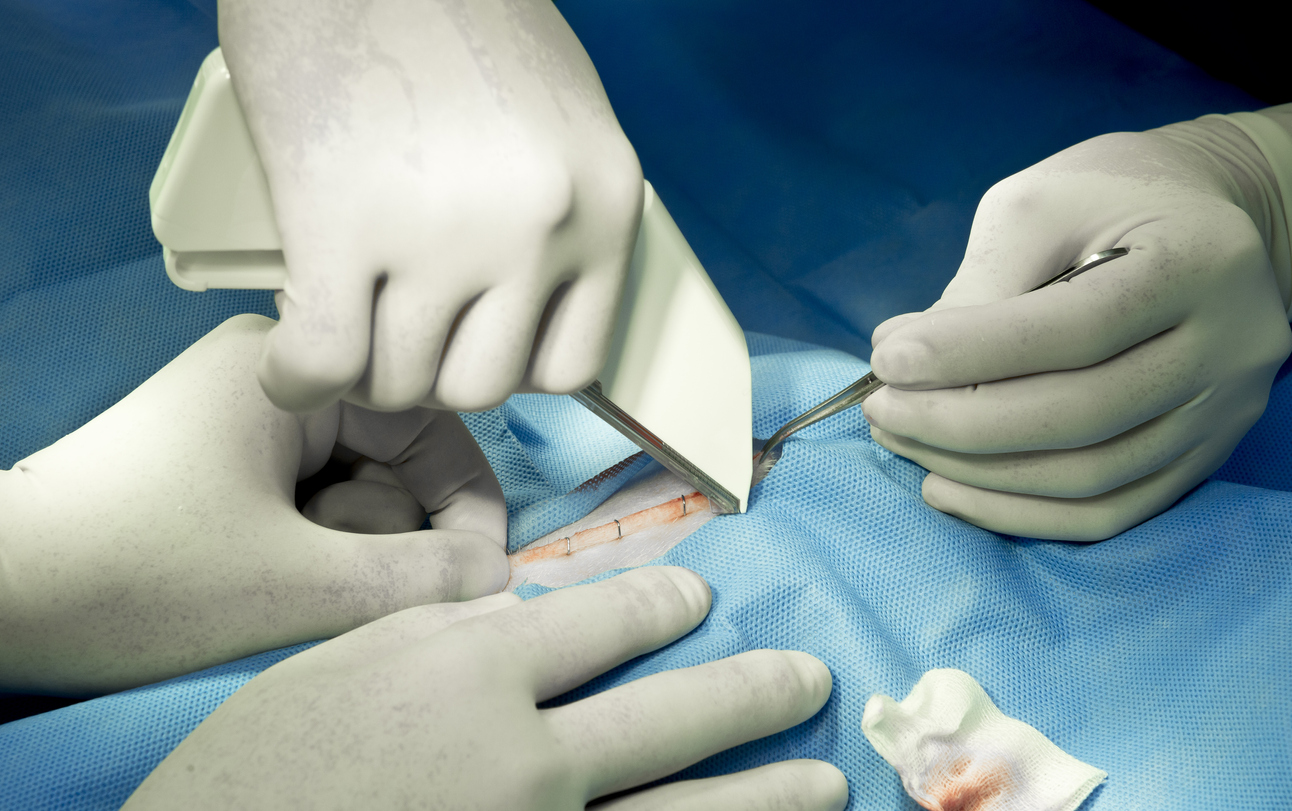
Skin staples are the most common method for skin closure. Skin staples provide a quick closure and provide even tension along the suture line. If done correctly they also provide a good cosmetic result. There are bioabsorbable staples placed under the skin, or stainless-steel staples, which must be removed five to seven days after the surgery.
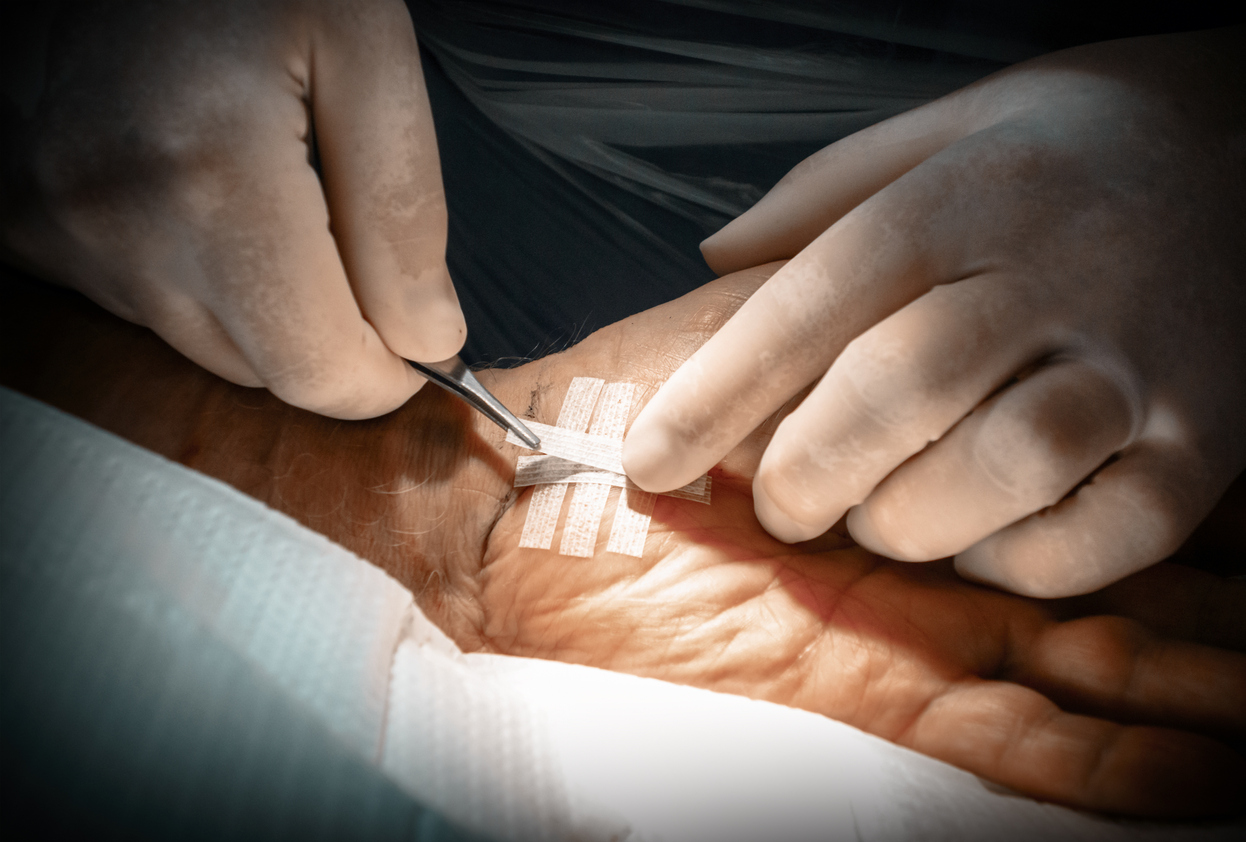
Wound closure strips may be used to approximate wounds with minimal static. Choosing the right adhesive strip depends on their tensile strength to maintain wound approximation. These strips must be applied to dry skin. Some surgeons may use a skin adhesive in adjunct to the wound edges. In some cases, supplemental skin sutures may be used to enhance wound closure with surgical adhesive tapes if edema occurs at the surgical site.
Skin adhesives have two distinct categories:
- Cyanoacrylates: These are used for superficial wound closure. They seal tissues well but do not provide any hemostatic properties. These types of skin adhesives also produce a longer-lasting inflammatory response within the body.
- Fibrin Tissue Adhesives: These types of adhesives work on the mechanism of the coagulation cascade, generating a hemostatic response, and creating clot formation from the conversion of fibrinogen to fibrin. These adhesives are activated when two components are mixed.
Wound Classifications
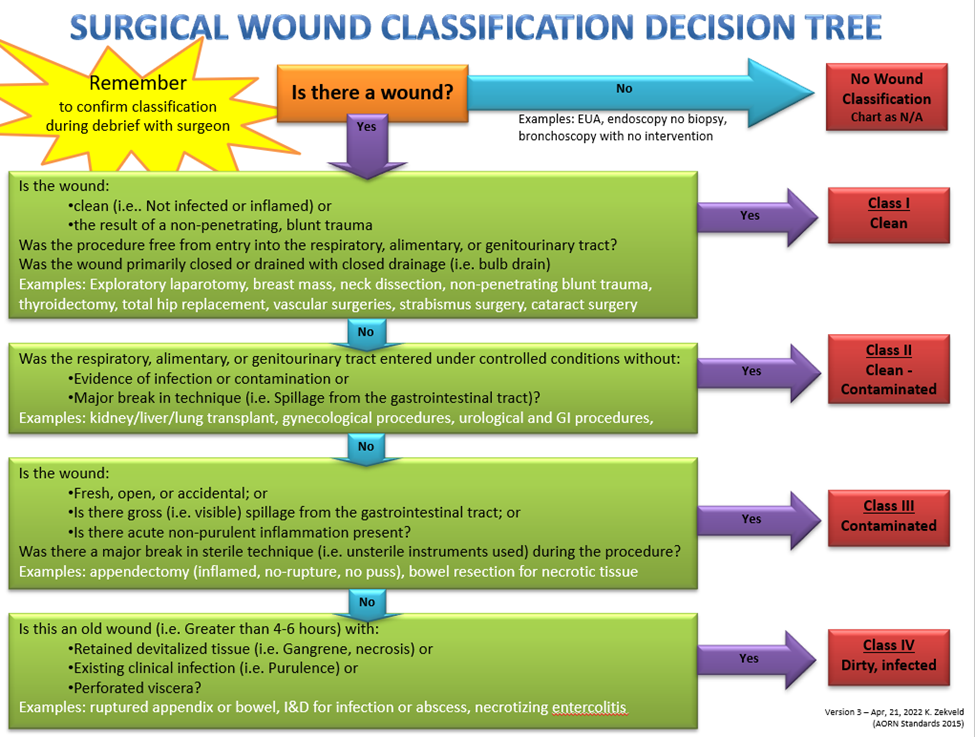
The Centre for Disease Control has recommended that all wounds have one of four classifications, based on the likelihood of contamination at the time of surgery.
Surgical Wound Classification Decision Tree
Remember to confirm the wound classification during the debrief with the surgeon.
Surgical Site Infections
You learned in course one that surgical site infections (SSIs) are the most common healthcare-associated infection among surgical patients.
In Canada, SSIs occur in two to five percent of all surgeries. SSIs are estimated to cost Canadians $350 thousand to $1 million (CAD) each year. SSIs increase hospital stays by an average of 11 days (about one and a half weeks) and causes patients to spend 60% more time in ICU than originally anticipated.
Let us look at the different classifications for SSIs:
(Bak, 2019; Canadian Patient Safety Institute [CPSI (Canadian Patient Safety Institute)], 2016)
Prevention of Surgical Site Infection Antibiotic Prophylaxis
The most effective way to prevent SSIs is to ensure appropriate antibiotic prophylaxis use. This includes selecting the appropriate antibiotic based on the surgical site, giving the antibiotic at the correct time, and limiting its duration. Modern technologies are evolving including the use of antibiotic-coated sutures.
During the 2016 CPSI audit, it was found that 91% of patients received the appropriate prophylactic antibiotics.
(CPSI, 2016)