Hazardous Medications
It is important to follow all medication guidelines when handling and dispensing any hazardous medication. Common hazardous medications used in the perioperative environment include cytotoxic medications.
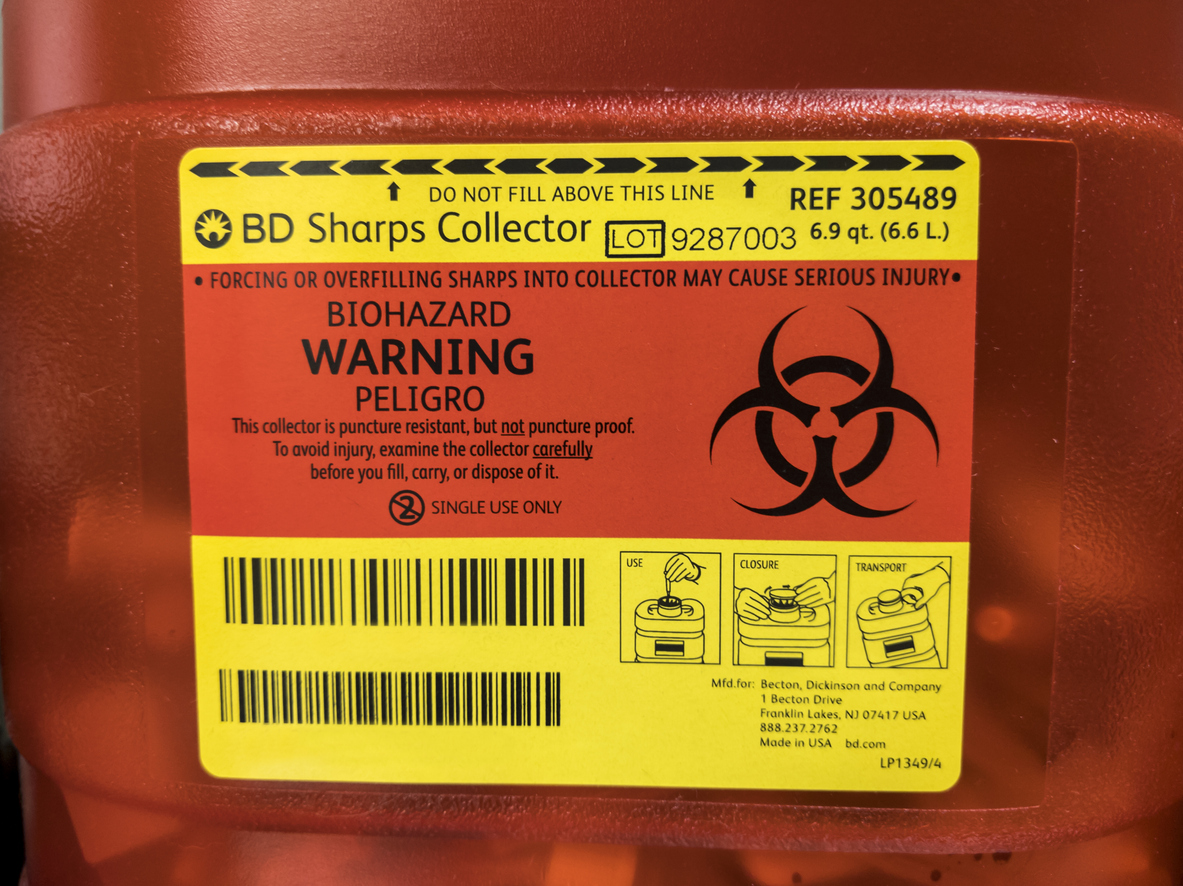
Follow hospital policies and product guidelines for handling and disposing of any containers, drapes or items that encounter the medication.
High Alert and Narcotic Medications
It is important that perioperative nurses maintain knowledge and awareness of narcotics, controlled drugs, and high-alert medications.
When handling narcotics and controlled drugs, nurses must follow Health Canada’s Controlled Drug and Substances Act as well as any policies within the hospital organization.
To learn more, click on the link Controlled Drugs and Substances Act (justice.gc.ca)
High-alert medications include the following:
- Antithrombotic agents
- Adrenergic agents
- Chemotherapy agents
- Concentrated electrolytes
- Insulin
- Narcotics
- Neuromuscular blocking agents
- Sedation agents
🧩 Practice Activity: High-Alert Medications
Choose one or multiple responses to answer the question. Select “Check” when you feel confident in your answer.
📁 Documentation Highlight
Any medication administered by the surgeon or nursing staff intraoperatively must be documented by the circulating nurse. The anesthesia provider documents all their medications. This includes the following:
- Name of the medication or irrigation solution.
- The dose or concentration.
- The volume is given.
- The location is given.
- The methods by which it was administered such as injected, instilled, washing, irrigation.
- Name of the person who administered the medication.
(ORNAC, 2021)
Compounding Medications in the OR
Compounding occurs when two or more different medications are added together. This does not include regular reconstitution or mixing as per the medication/drug manufacturer’s guidelines. Compounding happens when you combine two medications such as Heparin and Normal Saline irrigation to create a compounded fluid, i.e., heparinized saline. Nurses may never compound more than three medications.
Whenever possible, hospitals should look for pre-compounded solutions or have pharmacy compound medications to prevent errors.
(Burlingame, 2017)
📽️ AORN CINE-MED VIDEO
Navigate to the AORN Cine-Med website and make sure that you are logged in before clicking on the link below.
- Log in to watch the AORN (Association of perioperative Registered Nurses) Cine-Med Video: Perioperative Medication Safety
- Download the Study Guide included to follow along.
- (Thread to follow in Cine-Med – patient and worker safety – Perioperative Medication Safety)
- Runtime – 26 minutes
🧠 Graded Activity
In Blackboard, complete the Graded Activity: Case Study.