Considerations for Specimens
- Specimen analysis is dependent on the type of testing that has been ordered by the surgeon. When a specimen is sent for pathology, it goes to a pathology tech to prepare the sample. It is then reviewed and reported on by a pathologist.
- Special consideration is required for frozen and/or fresh specimens on evenings and weekends.
- Most institutions have an on-call pathologist who must be paged for urgent fresh/frozen specimens on evenings and weekends.
- For permanent specimens collected on evenings and weekends, follow your institution’s policy. Healthcare facilities require documentation for a chain of custody and centralized storage for specimens on evenings and weekends.
Patient/Family Requests for Specimens: If the family or patient requests a specimen after laboratory or pathological analysis, they must follow the institution’s policy and procedure.
(AORN, 2016 & ORNAC, 2021)
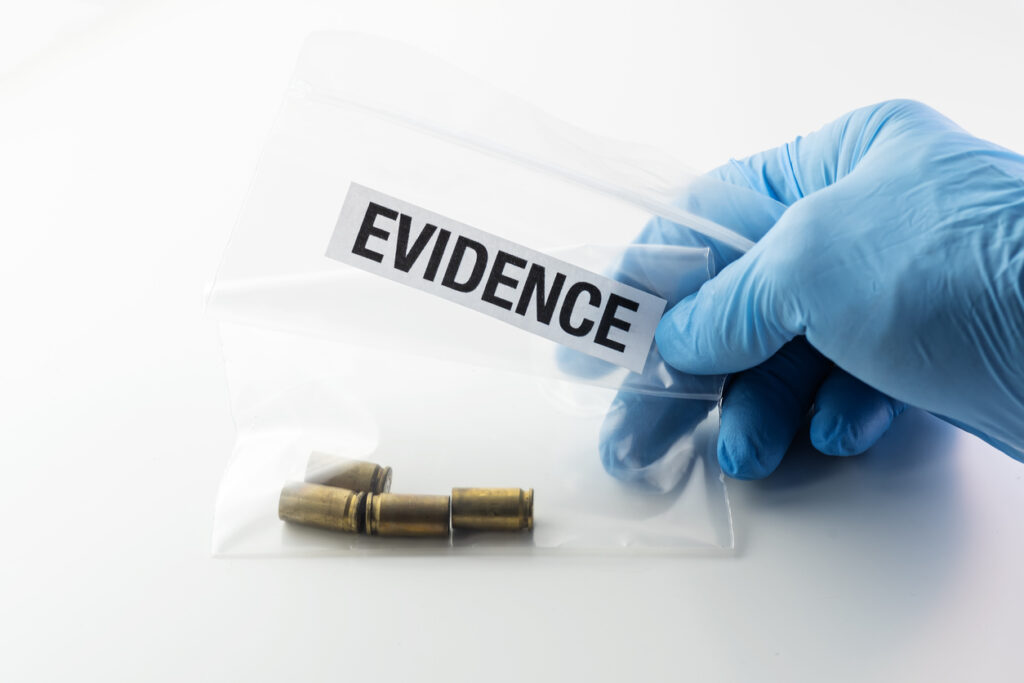
Foreign Body as Evidence
Each healthcare institution has a policy and procedure regarding the collection of forensic evidence/specimens such as knives, bullets, and other foreign bodies. The perioperative nurse is responsible for preserving this physical evidence as well as trace evidence such as hair, fibres, and biological evidence such as blood and bodily fluids. The chain of evidence must be established and documented as it may be required later for the litigation process. Nurses must document the evidence and patient statements, bodily marks, blood stains, and unusual odours.
Guidelines when collecting foreign bodies as evidence:
- Wear appropriate PPE.
- Always wear gloves and change them when handling each new piece of evidence.
- Minimize the handling of evidence as much as possible.
- Place each piece of evidence (specimen/foreign body) in separate containers.
- Do not handle metal foreign bodies with metal instruments or metal containers/pans. This is to preserve the integrity of metal foreign bodies such as bullets.
- Avoid wiping, washing, cleaning or discarding any evidence.
- Describe and document evidence from wounds individually.
- Label each piece of evidence.
- Maintain evidence in a locked cupboard until it is picked up by the police or coroner.
(ORNAC, 2021)
📁Documentation Highlights
Documentation allows for the tracking of specimens from their source to the appropriate destination. It can help prevent losing specimens and assist in an error analysis when a specimen is lost.
Document according to your intuition’s policy and procedure, including:
- The patient’s identification.
- Name of the specimen.
- Date and time the specimen was processed in the OR.
- The type of specimen such as routine, stat, urgent.
- Name and signature of the person sending the specimen.
- Identification of the person in the laboratory who received the specimen.
- The time when the specimen was transferred to the laboratory.
(ORNAC, 2021)
🧠 Graded Activity
In Blackboard, complete the Graded Activity: Specimen Containment.